Experience the perfect balance of performance and price with the new Mimosa C6x Lite Edition — built for today, ready for tomorrow.

Mimosa 6 Series fixed wireless radios enabled BSNL and local ISPs to restore and expand broadband connectivity across the remote Nancowry islands in the Andaman & Nicobar region. Using over-sea links up to 47.6 km, the deployment delivered multi-gigabit throughput, supported FTTH rollouts, and provided disaster-resilient communications when submarine fiber and satellite systems failed. The project demonstrates how high-capacity fixed wireless can serve as a strategic backbone for underserved island communities.
The Nancowry islands in the Andaman & Nicobar archipelago present one of India’s most remote and infrastructure-challenged telecom environments. In 2025, Mimosa 6 Series radios paired with ALGcom high-gain antennas enabled BSNL, Rectus Technologies, and local ISPs to interconnect islands over long ocean spans—delivering resilient broadband where submarine cable and satellite systems were unreliable or unavailable.
What began as a small pilot link evolved into a mission-critical RF backbone, restoring BSNL voice and data services across multiple islands during critical outages.
BSNL and local ISPs needed a way to:
The solution required high-capacity RF links capable of sustained multi-gigabit throughput, long range, and disaster resilience.
A multi-phase deployment was designed using Mimosa B6x radios operating in unlicensed 6 GHz paired with ALGcom 32 dBi antennas. Initial pilots validated achievable performance over 19+ km ocean paths. Following success, longer and more critical inter-island routes—including a 47.6 km link span—were commissioned under BSNL direction.
Collaboration among BSNL, Rectus Technologies, and local ISPs ensured regulatory approvals, installation logistics, and on-site technical execution.
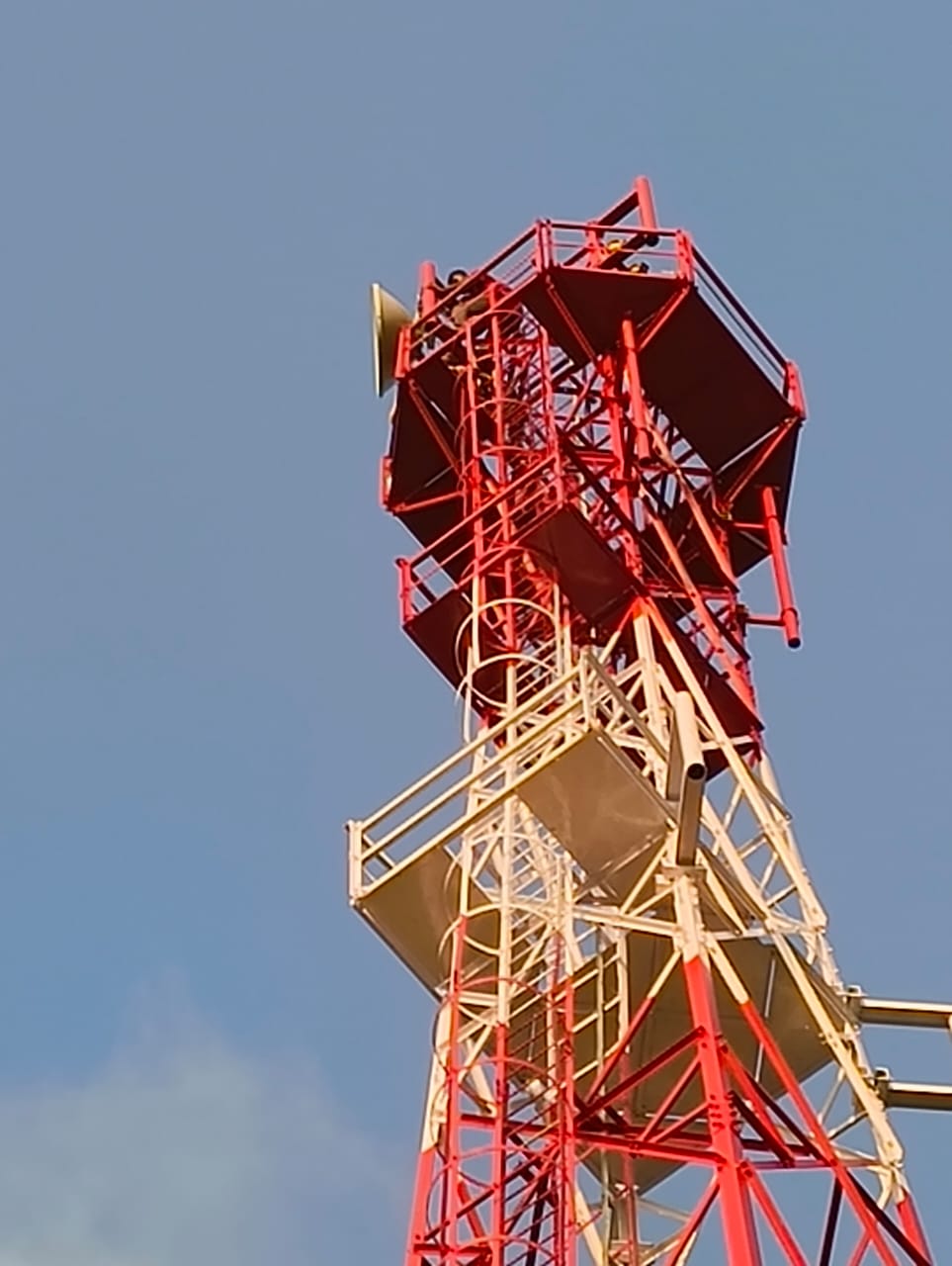
The Nancowry group of islands in the Bay of Bengal sits more than 400 km from Port Blair and is considered one of India’s most challenging telecom environments. With limited transport access, monsoon weather, protected tribal zones, and minimal local infrastructure, BSNL remains the sole telecom service provider across the region.
Historically, connectivity relied on a combination of submarine fiber and satellite links—both of which are vulnerable to weather events, equipment outages, and long repair cycles. Prior attempts to use fixed wireless access had been unsuccessful, reinforcing skepticism in the region.
Route: Kamorta → Katchal
Distance: 19.4 km (over sea)
A pilot link was initiated to evaluate whether modern 6 GHz fixed wireless access could enable reliable inter-island connectivity. Under BSNL supervision, a local ISP deployed:
Outcome:
The link achieved 2 Gbps throughput, allowing FTTH services to be launched on Katchal Island—marking the first major RF success in the region and reshaping perception around RF reliability.
A dual outage triggered an island-wide connectivity crisis:
With no transport or staff deployment options available, BSNL integrated existing Mimosa links to re-establish connectivity. RF effectively became the backbone for BSNL’s emergency recovery operations.
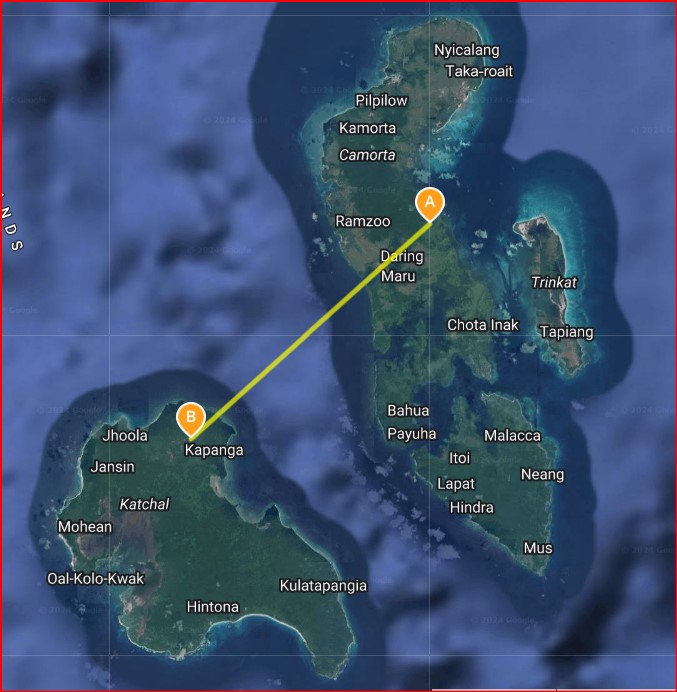
Route: Kamorta → Teressa
Distance: 47.6 km (over sea)
There was no reference deployment for a Mimosa 6 Series link at this distance, and logistics to reach the islands required special permits, ship services, and local administrative coordination.
Mimosa B6x radios and ALGcom antennas were transported to Kamorta, where BSNL engineers, local ISPs, and Rectus Technologies personnel jointly commissioned the link.
Milestone:
On 20 October 2025, the route achieved 1.6 Gbps sustained throughput, enabling full BSNL service restoration following additional switching infrastructure upgrades.
The success of the project led to several long-term outcomes:
The deployment was made possible through a multi-party collaborative effort:
In a region where submarine cable, satellite, and logistics challenges converge, the Nancowry project demonstrated the strategic importance of high-capacity RF networks. Mimosa 6 Series radios did more than deliver bandwidth—they provided resilience, restored connectivity, and enabled new broadband services where other systems were failing.
RF moved from “backup access” to “critical backbone.”
Experience the perfect balance of performance and price with the new Mimosa C6x Lite Edition — built for today, ready for tomorrow.